Le Coin à Guij random ramblings from me
Migrating to Jekyll
10 Feb 2013
I’ve decided to switch my blog from WordPress to a Jekyll-based system. When this article goes live, the migration should be done. I hope I managed to avoid flooding the planets that aggregate me with old articles (Planet Igalia, Planet GStreamer and Planet GNOME), if I failed, I apologise, feed aggregators are a bit like...
Video decoding in a sandbox
08 May 2012I would like to explain a bit the stuff I've been working on recently at Igalia. It is about playing with GStreamer and a sandboxing system to try and make the playback of untrusted media more secure. Hopefully writing this will be an occasion for me to get more distance and understand things better, and...
FOSDEM 2012 - can beer freeze?
02 Feb 2012Thanks to my awesome employer Igalia, I am flying tomorrow to the cold city of Brussels to attend FOSDEM 2012. I will give a lightning talk, Saturday at 13:40, about my balloon adventures at Nowhere, with an emphasis on how Free Software made it possible. Hopefully, this will motivate other Free Software hackers to get...
Gstreamer and OpenCV for image stabilisation
10 Nov 2011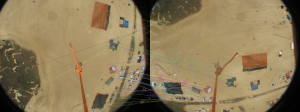
I am now back from Prague where I gave a talk on image stabilisation (and my holiday pictures). Hopefully a video of the talk will soon be online. In the meantime, I would like to explain a bit my efforts in written form, with some details slightly updated from the talk (the code progressed a...
Prague, we meet again!
23 Oct 2011Karlův most (Charles bridge) Tomorrow I will fly to Prague, going to the GStreamer Conference, then to LinuxCon Europe and ELCE. I'm excited to go back there, after having first visited this beautiful city in my last Eurotrip. I will give a talk at the GStreamer Conference about my work on image stabilisation, related...
Eurotrip starting soon: Desktop Summit, Berlin
03 Aug 2011On Friday, I am going on a little Eurotrip that will lead me through Germany, France, Ireland and Czech Republic. The whole trip will last a month. If I manage better than some american guys, I will get to Berlin on Friday afternoon for the desktop summit: I am going there sponsored by the awesome...
Playing with balloons
09 May 2011These days, I'm spending a big part of my free time on a nice project with a few friends. That's a project involving a balloon. We have recently started a blog called Balloon Freaks to talk about this, you might want to check it out.
Blog back online
27 Apr 2011I finally found the time to migrate my blog to the new server I have (the old server died a few weeks ago). I hope I managed to do the transition correctly, and that people following me through a feed reader and/or a planet won't be flooded with a truckload of old articles. If that...
Fosdem
22 Jan 2011Like a few friends have stated, I am now saying it loud and clear: And for that I should thank the awesome company for which I work. I am sure great time will be had, as well as great conversations about free software, multimedia, technology, life, the universe and everything. See you all at FOSDEM!
Recent hacks: python with gdb to follow gstreamer
09 Nov 2010I've recently discovered one too little-known feature of gdb: you can script it with python. It's even in the documentation, and there are nice tutorials available which I invite you to read. The two main cool things you can do in python, is define new commands, and new convenience functions. Unfortunately, as you can read...
New job, new flat: new life!
05 Oct 2010You might have noticed one way or another, that I have just started a new job at Igalia. I'm very excited about joining a company that seems to try and do everything the right way™, and with really great people. At least for starters, and to flex my hacking muscles a bit, I'm going to hack on...
Camino de Santiago
04 Aug 2010Tomorrow (Thursday 5th of August 2010), I am going to meet Paola and Ugo on the Camino de Santiago. They've been walking since last Friday, and with them, I should try to reach Santiago de Compostela, after about 3 weeks of walking, if we make it to there, that is. Since I'll probably have plenty...
Fun with Vodafone
02 Jul 2010Yesterday, I left a message, in French, on the voicemail of my now ex-landlord to set up a meeting to give him the keys back. He uses Vodafone, and they have that nice service where they transcribe automatically voice messages into text messages (they call it DictaSMS). It turns out that it doesn't work that...
Scratching an itch -- make bzr-gtk collapse
18 May 2010Lately, I've been working on scratching an itch I have with bazaar. It's a great tool that I use a lot, but I find myself committing a GNOME heresy: one of the tool I use most, "bzr qlog" (which is great by the way), is a QT application in my nice GNOME environment. Heresy! The...
Playing with the Android NDK and GStreamer
13 Mar 2010GStreamer had been ported to android for a while by Prajnashi and Edward Hervey (see http://groups.google.com/group/prajnashi), but this has been done on a "platform" level. In other words, to use it, you need a custom firmware. What I would like to see is a way to embed GStreamer in an application that you can distribute...
New look!
11 Mar 2010Ok, I think there are three reasons for me half abandoning this blog:lazynessmicro bloggingugliness of the style of the blogToday, I have resolved point 3 (or at least made a big leap in that direction).That old CSS, first with the Union Jack, then with a mix of it with la Senyera and the awful pink...
Emont.org breakage -- emont.org tout cassé
20 Sep 2009So, my apologies to those who tried to write me to an email address @emont.org recently. It was unavailable since the 12th of September. I had forgotten to renew the domain, and I didn't get the reminders from gandi.net since my fetchmail wasn't running any more (and the non-emont.org address I use for gandi is...
Moovida!
21 May 2009Long time no blog! So, lately, the big news is, at work, we've just released Moovida 1.0. Moovida is what used to be called Elisa, with more cool in it :). We've totally reworked the interface, and I must say it now rocks! Kuddos to everyone involved, we're starting to have something quite cool. Just...
Chères cousines
10 Mar 2009J'ai deux cousines que j'aime beaucoup[1], qui ont eu l'idée saugrenue, mais pleine de bonne volonté, de me faire suivre l'e-mail decrit ici. Je leur ai rapidement expliqué (peut-être de façon expéditive, j'ai beaucoup de courrier à traiter chaque jour, du fait de mes nombreux fans) que non, ça ne sauvera pas la planète, en...
Vista...
13 Nov 2008Here and now at work, I have to do stuff under windows (obviously, we want elisa to work under windows). On the machine I have at work, that means Vista Home in Spanish (that's what was installed). To do that stuff, I need some tools, like the excellent bzr, written in python (this detail has...
New Microsoft product?
25 Oct 2008Having heard of Dell's new netbook, the mini 9, I wanted to know more about it; here's what I found on Dell's French site:
À toi qui vieillis
11 Aug 2008C'est pas grave de vieillir, ça a ses avantages. Ça permet d'être un gamin un peu plus vieux, qui peut jouer à des jeux auxquels il pouvait pas jouer avant. La preuve en image... J'ai hâte de pouvoir faire des jeux marrants avec mes rides :)
Ils sont mariés!
20 Jul 2008Le week-end dernier, je suis aller faire un tour en Alsace pour le mariage de deux bons potes: Claire et Mathieu. Et bien voilà, que ça soit crié partout, ils sont mariés, on a bien fêté, et j'ai des preuves:Plus de preuves ici, vu que beaucoup de gens m'ont mis la pression pour que je...
Opening windows
09 May 2008To my friends who, for whatever reason, run that popular proprietary operating system from Redmond: You can now try everyone's favourite media centre on your machine, and have a glimpse of the cool stuff we do at my company. If you wonder what I do there: I work on the part that makes the display...
Random vim tips
02 May 2008Here are two things I found quite useful recently with vim:GOBgen, which I've used intensively while writing the code skeleton of PAF (which is now about complete). It's not perfect, I always find myself tweaking the content it created, but it's still a lot faster than doing everything by hand.A small tweak to the quickfix...
Rock 'n Roll!
14 Apr 2008I'm going to the Electric Festival with Olivier. Gonna kick arses, check out the line-up! For people who aren't friends with flash, that includes:Rage Against The MachineMetallicaIggy & the StoogesMachine HeadCavalera ConspiracySerj TankianEthsQueends of the Stone AgeETHSWhich are all bands I'm really excited to see live. I either don't know or don't care about the...
PAF update
14 Apr 2008Haven't been too active on PAF lately, but I'm coming back to it. I will try to have a satisfactory API this week, and then continue writing the code skeleton and doc, which I have started a bit (for stuff I don't think I will change much in the API).Also, I have put stuff in...
How much does a g_object_set() cost?
14 Apr 2008I was wondering about this issue for PAF. I want to provide facilities to animate GObject properties, but is this something sensible? In the case of an interactive GUI, can we think of updating a hundred properties for each frame?To answer these questions, I have written some code, that would do as many g_object_set()/g_object_get() as...
Future of Pigment
11 Mar 2008Pigment, (especially Jerakeen) is great stuff. I have been involved in that for about five months now, and I am quite proud of being part of this. For instance, Elisa or my recent screencasts speak for themselves: Pigment rocks! Yet, Pigment could rock even more; here is why, and how... The issuesAs I said earlier,...
Some pigment bling
10 Mar 2008Some of you may have been to FOSDEM this year, where Loic did a great talk on pigment, or so I have been told. I wasn't there, but, to continue what Kaleo started, I have done these two screencasts. Interactive Animation This demonstration shows the ability of pigment to load images and place them in...
Paf! Animation Framework!
10 Mar 2008As mentioned earlier, these days, I've been thinking about animation issues. It seems the free world lacks an animation library that abstracts out the complexities of animations. A lot of libraries implement their own animation routines, which are generally incomplete and often unusable in other contexts than these libraries. I feel that we need (and...
Jerakeen and Tubul
05 Mar 2008Jerakeen and Tubul are two of the elephants on the back of Great A'Tuin, holding the world on their shoulders. This is also how we named the new releases of pigment (0.3.5) and pigment-python (0.3.3), available since Monday. Among the new stuff in these releases, not mentioning bug fixes, I particularly like: The performances of...
Back from Murphy's world.
17 Jan 2008There are times when everything goes wrong, but these times make you appreciate things when they go back to normal.At my flat, we had an issue with the shower until this week-end: the water didn't evacuate easily. That's a kind of situation that is annoying, but that generally takes some time to get fixed. It...
Pics from my new life in Barcelona.
28 Oct 2007I've uploaded the few pictures I've taken since I'm in Barcelona. You can find them here.
View from my desk
15 Oct 2007Here is what I can see through the window on my left. And I've only thought of taking a picture of that today!
video
01 Oct 2007Some people might be interested in that one. here for the file, the java applet might not work.
¡Barcelona!
29 Sep 2007Here I am. I've arrived on Tuesday night, and started my new job at Fluendo Embedded. The company is great, with a lot of cool (and bright) people. It's a bit crazy here and very different to what I've experienced in England. The working hours are much better from my point of view, my way...
Moving...
27 Aug 2007For those who don't know, or haven't guessed with the new graphics of the blog, I'm quitting Britain for now. It has been great, I've enjoyed my time here, both at the University of Hull last year, and in Cambridge until now. I'm moving out of Cambridge next Thursday; and after a break around France...
IM
05 Aug 2007Ever wondered why I don't like MSN and prefer open standards like Jabber ? This is one of the reasons.MSNCensorship - Adium X - Trac
My little eurotrip
01 Jul 2007I am now back in Cambridge, and on week-end, so I have the time to make a post on my holidays in Barcelona and Trondheim. See here for the itinerary. This all started on a Tuesday, when I got in the train where Karolína and Jan (great Czech friends studying in Hull) were already sleeping/seated....
Google hack!
29 Mar 2007Here's a nice Google hack that I wanted to share: It's about a Google product that isn't known to everyone. Only true geeks attending very technical conferences such as the FOSDEM know about that product, but it's one of the coolest things Google has made recently. It may be the only piece of hardware they...
Text messages, a bad technology ?
18 Mar 2007Yesterday, early in the morning (11.42 to be exact), I was awaken by a text message received on my phone. Yes, spam does not only exist for emails, it has its mobile phone counterpart (and it will be funny when we all have internet instant messaging on our phones, mixing the best and worst of...
Download Festival
14 Mar 2007Who wanna go there ? As I mentioned earlier, this can be cool, and now there is a great lineup announced, with Dream Theater, Korn, Machine Head, Slayer and a quite few others...I think a decision should be made quickly, since the website says:Meanwhile, demand for this year’s festival has seen tickets sell faster than...
ISA Party
08 Mar 2007Since I love English trains, I'm going to try to come to the ISA party tomorrow (9/3). Hope I'll catch my train and that none of the 4 trains I have to take will be late... If all this happen, I'll be there at about 10, so, expect me at about 11.30 :/I hope *everybody*...
Woohoo, FOSDEM!
26 Feb 2007I'm writing these lines in the train, back from Bruxelles where I was this week-end, attending the Free and Open Source Developers European Meeting (FOSDEM). I 've had a really great time there, it was hard to choose between the available conferences, but I managed to view quite a few interesting ones, including but not...
What if ? (2)
13 Feb 2007What if I went to the download festival ? Usually, there's a quite good line-up there, though this year it doesn't seem as good (a bit too emo for my taste, but slayer is rumoured to come, and there will sure be more real bands than the one announced).Who wanna join ? It can be...
What if ? (1)
13 Feb 2007What if I had a big party for my birthday ? It's on the 2nd of March, so I could make a party (here, in Cambridge) on the 3rd. But a party is as good as the people who are there, and if I were alone at my party, well... it would suck. Would YOU...
Why I don't post much these days...
02 Feb 2007Tough employee life: I have much less free time (how good it was to be a student...) Tough employee life: my life isn't that interesting now, and much of the interesting stuff is hard to tell without risking to tell company secrets (NDA and all that)... Anyway, a big part of my 2 regular readers...
Which is the worst company in the world ?
02 Feb 2007I thought earlier that it was Bulldog, but maybe I was wrong.
Pourquoi je n'écris pas beaucoup ces temps-ci...
02 Feb 2007La dure vie d'employé : j'ai moins de temps à moi, c'est assez velo-boulot-dodo (c'était bien d'être étudiant...) La dure vie d'employé : ma vie est peut-être un peu moins passionnante, et une bonne partie des trucs intéressants est difficile à raconter sans risquer de trahir un certain secret professionnel (NDA, toussa)... De toutes façons,...
Je suis encore en vie -- I'm still alive
28 Nov 2006Pour ceux qui ne savaient pas, j'ai commencé aujourd'hui à travailler chez Autonomy. C'est dur, il faut se lever le matin, mais pour l'instant je survis.For those who didn't know yet, I started today my new job at Autonomy.I have to wake up in the morning, but so far, I'm still alive.
Lots of things...
11 Nov 2006I have loads of things to tell here, but I have no time :)That's the problem of blogging: either I do a lot of things and don't have any time to write, or I have plenty of time and nothing to write about. I'm in the first case now...I'll try to upload some pictures there...
How to install a socket (part II)
05 Nov 2006Okay, remember last time ? At the end, we had that beautiful orange box fixed to the wall, and still some work to do. Live from Strasbourg, where I'm not installing sockets, and where we use candles when it's dark, I'm telling you today what's next. 4. Prepare the WiresWe gotta cut and strip the...
Au revoir, Bretagne
02 Nov 2006C'est une petite semaine très plaisante que je viens de passer en Bretagne et en famille (chez ma soeur). Voici quelques photos pour vous convaincre de la beauté de cette région (même à la Toussaint). I have just spent a lovely week in Brittany, with my family (at my sister's). Here are a few pics...
Rover, Wanderer, Nomad, Vagabond: Call Me What You Will
26 Oct 2006...And the road becomes my bride I have stripped of all but pride So in her I do confide And she keeps me satisfied Gives me all I need Tomorrow, I start my one month wandering through France and more. First, I will go with my parents to Brest, at my sister's (10+ hours of...
How to install a socket (part I)
21 Oct 2006Here is how I spend my days when I am not looking for a job (or doing nothing): I install sockets in my parents' future house. These days, I've installed all kinds of sockets: phone, TV, ethernet, and, of course, electricity. I'm almost done now, only a few more to install, and I'm sure my...
Transition iienne
14 Oct 2006Alors que je finis l'IIE, elle se transforme tout plein. J'y suis allé faire un tour cette semaine. Tout y est dans un état de temporaire (et comme toute chose temporaire va durer ainsi), et pour les yeux ébahis de ceux qui ne peuvent/veulent y aller, voici une ou deux photos: Le bar© et ses...
Something you don't have in England...
14 Oct 2006Real bread ! as well as things such as the bread knife or the bread board pictured here :) You can find this in mostly any bakery in France, and there are a lot of these (maybe as many as pubs in UK, though not as many as bars in brittany).
Building Houses
14 Oct 2006My parents have just finished building their house, and they are building 2 new ones. One where they will soon move, and the other one for renting. This is a (good?) way not to get bored: work in the house. Since my father doesn't like to install wall sockets, I do that (very interesting) job....
Highway to Hull
05 Oct 2006I miss the chocolate smell so much, that I'll be back from the 10th of november until the 20th (already bought my eurostar tickets). Hope I'll see as many of you as possible. In a perfect world, there would be a mediterranean party and many house parties while I'm there :) For those wondering what...
Bob va bien !
04 Oct 2006Aujourd'hui, j'ai fait une petite excursion jusqu'à la clinique des Pyrénées à Colomiers (banlieue toulousaine), pour aller faire un kikoo à notre ami Bob. Il se porte plutôt bien malgré sa cicatrice de 28 agraffes, et il est bien content de sortir à la fin de la semaine (vous pourrez prochainement le voir à Paris)....
Fin...
27 Sep 2006Ça y est, j'ai emmené ma thèse de master à la reliure, je devrai normalement la soumettre demain. Il me reste un week-end pour profiter encore un peu de Hull, et je vais rentrer en France, où j'ai plein de monde à voir. Je suis un peu triste de partir, c'était clairement une des meilleures...
Changements pour le blog
16 Sep 2006Ce blog profite désormais d'une solution d'hébergement plus efficace (plus chère aussi, puisqu'auparavant c'était gratuit). J'ai profité de l'occasion pour investir dans le nom de domaine emont.org. Ces deux raisons font que la nouvelle adresse du blog est http://guij.emont.org/blog/. Le déplacement va peut-être causer des petits bugs par-ci par-là, mais je vais essayer de résoudre...
Beware the giant chicken !
15 May 2006On le pensait mort de la grippe aviaire, mais il était juste parti en week-end prolongé. Le poulet géant est le fruit d'une mutation due à la grippe aviaire et aux usines chimiques de Hull, et est fortement suspecté dans la disparition de nombreux étudiants. Ce bug de la matrice, cette erreur de la nature,...
Nouveau thème !
09 May 2006Vous voyez ici un nouveau thème que j'ai dérivé de l'excellent almost spring de beccary. Comme j'en ai fait un thème assez "anglais", je l'ai appelé almost autumn. Il est téléchargeable ici.
Réorganisation
08 May 2006On a tout changé la disposition des meubles au labo, donc maintenant ça ressemble à ça : Je rajouterai une photo de comment c'était avant si j'en trouve une, mais en tous cas maintenant c'est plus la classe (et surtout, on ne se gêne pas l'un l'autre avec olivier qui occupe le bureau de droite,...
Attention à ce qu'on mange !
08 May 2006Quand on veut manger en Angleterre et qu'on est Français, on survit comme on peut. On se réunit fréquemment entre français pour se faire des bouffes convenables, en composant avec les ingrédients qu'on trouve. Une chose de bien à ce propos, c'est qu'on trouve désormais à la coop et au sainsburry's (des petites supérettes proches)...
Découvrons gnome-blog
23 Apr 2006J'ai décidé de tester gnome-blog, je le teste en ce moment même. Peut-être qu'avec un outil du genre je peux réussir à mettre à jour un blog plus fréquemment... Edit: Effectivement, j'ai posté 2 articles en peu de temps depuis. Il y a aussi que je suis passé à wordpress 2, qui est bien plus...